Meta Title: Prosthetic Silicone Fingers: Benefits, Uses & Features
Meta Description: Discover how prosthetic silicone fingers provide a realistic appearance, comfortable fit, durability, customization, and support for everyday activities and nail-art training.
Suggested URL Slug: prosthetic-silicone-fingers
Primary Keyword: prosthetic silicone fingers
Secondary Keywords: silicone prosthetic fingers, silicone finger prosthesis, realistic prosthetic fingers, silicone fake fingers, nail training fingers, custom silicone prosthetics
Prosthetic Silicone Fingers: Benefits, Uses, Features and More
Losing a finger or experiencing a change in the appearance of the hand can affect more than physical function. It can also influence confidence, comfort, and how people feel in everyday social situations. Prosthetic silicone fingers offer a practical option for people looking for a realistic-looking finger replacement that can blend naturally with the hand.
Modern silicone prosthetics are designed with attention to appearance, texture, comfort, and durability. Depending on the individual’s needs, they may be customized in different shapes, sizes, and skin tones.
Interestingly, silicone finger models are also used outside prosthetics. Silicone practice fingers have become useful tools for nail-art students, beauty professionals, and beginners who want to practice manicure and nail-design techniques.
In this article, we explore the features, benefits, applications, and important considerations surrounding silicone prosthetic fingers and silicone training models.
What Are Prosthetic Silicone Fingers?
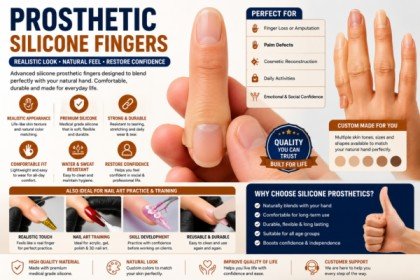
Prosthetic silicone fingers are finger-shaped prosthetic devices made primarily from flexible silicone materials. They are designed to provide a realistic visual appearance and, depending on the design and fitting method, may also support certain everyday activities.
One of the main characteristics of silicone is its soft, skin-like feel. This makes it particularly suitable for creating prosthetic products where appearance and comfort are important.
The surface can be designed to reproduce details associated with a natural finger, including:
- Skin-like texture
- Natural-looking color
- Finger shape and proportions
- Nail appearance
- Surface details and contours
Customization can make the prosthesis appear more naturally integrated with the user’s hand.
Why Are Silicone Prosthetic Fingers Popular?
Traditional prosthetic materials can sometimes have a harder or more artificial appearance. Silicone provides a different experience because it can be molded into detailed shapes while maintaining a relatively soft and flexible surface.
Some of the reasons people consider silicone prosthetic fingers include:
1. Realistic Appearance
A major benefit is the ability to create a lifelike appearance. Colors, textures, nail details, and finger contours can be customized to create a closer visual match with the user’s natural hand.
2. Soft and Flexible Material
Silicone can provide a softer feel compared with rigid materials. This can make a properly fitted prosthetic more comfortable for everyday wear.
3. Customization
Different people have different hand shapes, skin tones, and requirements. Custom silicone prosthetics can be created in various sizes, shapes, and colors.
4. Durable Construction
Quality silicone can withstand regular handling and everyday wear. Proper care and maintenance can help preserve the appearance and condition of the prosthetic.
5. Improved Confidence
A realistic prosthetic may help some users feel more comfortable about the appearance of their hand in social and professional environments.
Realistic Design of Silicone Finger Prosthetics
The appearance of a prosthetic finger can be an important consideration for many users. Modern silicone techniques allow manufacturers to create highly detailed surfaces that resemble natural skin.
A realistic silicone finger may incorporate details such as:
- Natural skin coloration
- Fine surface texture
- Realistic nail design
- Natural finger proportions
- Customized contours
- Matching color transitions
The goal is to create a prosthetic that looks as natural as possible rather than appearing like a simple artificial replacement.
For the best results, professional assessment and customization are important because the correct size and shape can make a significant difference in appearance and comfort.
Custom Silicone Prosthetic Fingers for Different Needs
No two hands are exactly the same. For this reason, customization can be an important part of choosing a silicone prosthetic finger.
Depending on the provider and individual requirements, customization may include:
Skin Tone Matching
Different shades can be used to create a closer match with the surrounding skin.
Size and Shape
The prosthetic can be designed according to the missing finger or the shape of the hand.
Nail Appearance
Nail details can be incorporated to make the finger look more natural.
Individual Fitting
A properly fitted prosthetic can improve comfort and stability compared with a poorly fitting model.
Anyone considering a medical or cosmetic prosthetic should discuss fitting requirements with a qualified prosthetic professional.
Everyday Uses of Silicone Prosthetic Fingers
A silicone prosthetic finger may provide useful support for certain everyday activities, depending on its design and the user’s individual situation.
Some users may find a well-designed prosthesis helpful when performing activities involving the hand, such as:
- Handling small objects
- Typing
- Using mobile devices
- Performing routine household activities
- Maintaining a more natural hand appearance
The level of functional support varies between different prosthetic designs. A cosmetic silicone finger, for example, may have different capabilities from a more function-oriented prosthetic.
Silicone Prosthetics and Personal Confidence
The impact of a finger loss or hand difference is not always limited to physical considerations.
Some people may feel self-conscious when meeting others, attending social events, or working in public-facing environments. A realistic silicone prosthesis can offer an option for people who want to restore a more natural-looking appearance.
For some users, this can contribute to greater confidence and comfort in everyday situations.
However, every person’s experience is different, and a prosthetic should be selected according to individual needs and professional advice.
Silicone Fingers for Nail-Art Practice
Silicone fingers are not limited to prosthetic applications.
Another popular use is nail-art training.
Silicone practice fingers are designed to imitate the shape and proportions of real fingers, allowing students and nail technicians to practice manicure techniques without working directly on a person.
They can be useful for:
- Nail polish practice
- Gel nail techniques
- Acrylic applications
- Nail extensions
- Nail shaping
- Decorative nail art
- 3D nail designs
- Training and demonstrations
This makes silicone training fingers useful for both beginners and experienced nail-art professionals.
Benefits of Silicone Practice Fingers for Nail Technicians
Learning nail art takes practice. Beginners may not always have access to a model, particularly when they want to repeatedly practice the same technique.
Silicone practice fingers provide a convenient alternative.
Practice Without a Live Model
Students can work on techniques without needing another person to volunteer as a practice model.
Experiment With Different Designs
Learners can test different colors, shapes, patterns, and decorative techniques.
Build Confidence
Repeated practice can help beginners become more comfortable with their tools and techniques.
Suitable for Training
Beauty schools, nail academies, and independent learners can use practice fingers for demonstrations and skill development.
Reusable
Many silicone training models can be used repeatedly when properly cleaned and maintained.
How Silicone Training Fingers Help Beginners
For someone learning nail art, controlling brushes, files, gels, and other tools can take time.
A practice finger provides a stable surface where beginners can experiment and learn from mistakes.
For example, a learner can practice:
- Preparing the nail surface.
- Applying polish.
- Creating nail shapes.
- Applying decorative patterns.
- Practicing extensions.
- Creating detailed nail-art designs.
- Removing the finished design and trying again.
This repeated practice can help improve hand control, accuracy, and confidence.
Silicone Prosthetic Fingers vs. Silicone Nail Practice Fingers
Although both products use silicone, they serve different purposes.
| Feature | Silicone Prosthetic Finger | Silicone Practice Finger |
|---|---|---|
| Main purpose | Prosthetic/cosmetic use | Nail-art training |
| Designed for wear | Depending on the product | Generally no |
| Customization | Often available | Usually standardized |
| Skin-tone matching | May be available | Usually not the main purpose |
| Nail-art practice | Not the primary purpose | Main purpose |
| Professional fitting | May be required | Usually unnecessary |
It is important not to confuse a medical or cosmetic prosthetic with a nail-training model. They are designed for different applications.
How to Maintain Silicone Products
Proper care can help maintain the appearance and condition of silicone products.
General maintenance may include:
- Follow the manufacturer’s cleaning instructions.
- Keep the silicone surface clean and dry.
- Avoid unnecessary exposure to harsh chemicals.
- Store the product in an appropriate location.
- Avoid excessive stretching or pulling.
- Inspect the product regularly for signs of damage.
For prosthetic products, always follow the care instructions provided by the manufacturer or prosthetic professional.
What to Consider Before Choosing Silicone Prosthetic Fingers
Before purchasing a silicone finger prosthesis, consider several factors.
Material Quality
Look for a product made from appropriate, high-quality silicone intended for its specific application.
Fit
The correct fit is essential for comfort and appearance.
Appearance
Consider skin tone, nail appearance, texture, and overall shape.
Customization
If you require a close match to your existing hand, ask whether custom sizing and color matching are available.
Durability
Consider how frequently the prosthetic will be used and how well it is designed to withstand everyday wear.
Professional Guidance
For an actual prosthetic following finger loss or a hand-related condition, professional assessment is recommended before selecting a product.
Are Silicone Prosthetic Fingers Comfortable?
Comfort depends on several factors, including the design, fit, material, attachment method, and individual user.
Silicone can provide a soft and flexible surface, but even a high-quality prosthetic may become uncomfortable if it is not fitted correctly.
A professional fitting can help address issues such as:
- Excessive movement
- Pressure points
- Incorrect sizing
- Poor alignment
- Skin irritation
If discomfort, irritation, or other problems occur, the prosthesis should be evaluated by an appropriate professional.
Are Silicone Prosthetic Fingers Durable?
Silicone is known for its flexibility and resistance to everyday handling, but durability varies significantly between products.
The lifespan of a silicone prosthetic can depend on:
- Material quality
- Frequency of use
- Exposure to sunlight and chemicals
- Cleaning practices
- Storage conditions
- Physical stress
- Manufacturing quality
Regular care and following the manufacturer’s instructions can help extend the useful life of the product.
Final Thoughts
Prosthetic silicone fingers offer an interesting combination of realistic appearance, flexible material, customization, and everyday comfort. For individuals looking for a more natural-looking finger replacement, silicone can provide an attractive option when professionally designed and fitted.
At the same time, silicone finger models have found another valuable application in the beauty industry. Silicone practice fingers for nail art give students and professionals a convenient way to practice manicure techniques, nail extensions, and creative designs.
Whether used for prosthetic purposes or professional training, silicone technology demonstrates how a flexible material can be adapted to different needs.
The right choice ultimately depends on the intended purpose. For a prosthetic application, professional fitting and individual assessment are important. For nail-art education, a reusable training model can provide a practical surface for developing skills.
Frequently Asked Questions
1. What are silicone prosthetic fingers?
Silicone prosthetic fingers are finger-shaped prosthetic products designed to provide a realistic appearance and, depending on their design, support cosmetic or functional needs.
2. Do silicone prosthetic fingers look natural?
They can be designed with realistic skin texture, colors, contours, and nail details. Customization can help create a closer match to the user’s natural hand.
3. Are silicone prosthetic fingers customizable?
Many silicone prosthetics can be customized according to size, shape, color, and other individual requirements.
4. Can silicone fingers be used for nail-art practice?
Yes. Silicone practice fingers are commonly designed for manicure and nail-art training, allowing learners to practice different techniques without a live model.
5. Are silicone prosthetic fingers suitable for everyday use?
Some are designed for everyday wear, but suitability depends on the individual product, fitting, and intended purpose. Professional guidance is recommended for prosthetic applications.
6. How do I clean a silicone prosthetic finger?
Cleaning instructions vary by product. The safest approach is to follow the manufacturer’s specific care and cleaning instructions.
7. Are silicone prosthetic fingers expensive?
The price can vary considerably depending on customization, materials, design, fitting, and the provider. Custom-made prosthetics may cost more than standard options.
SEO Tags
Prosthetic Silicone Fingers, Silicone Prosthetic Fingers, Silicone Finger Prosthesis, Realistic Prosthetic Fingers, Silicone Fake Fingers, Custom Silicone Prosthetics, Nail Training Fingers, Silicone Practice Fingers, Health & Fitness, Medical Gadgets
Suggested Featured Image SEO
Image File Name: prosthetic-silicone-fingers-realistic-custom-fit.jpg
Image Alt Text: Realistic prosthetic silicone fingers with custom skin tone and nail details
Image Title: Prosthetic Silicone Fingers – Realistic and Customizable Finger Prosthetics
Image Caption: Modern silicone prosthetic fingers can be customized for a realistic appearance, comfortable fit, and everyday use.