Bath time is often heralded as one of the most magical bonding experiences between a parent and child. The warm water, the gentle splashing, and the sweet baby shampoo scent create a peaceful wind-down routine before bedtime. However, if you are a new parent, the reality of bath time can sometimes look a little different: a slippery, squirming infant, an aching back from leaning over a standard porcelain tub, and a lingering worry about water safety.
Enter the baby bath bucket with a support seat—a modern parenting game-changer designed to alleviate these exact anxieties.
Unlike traditional, oversized plastic baby tubs that take up half your bathroom floor, or standard adult tubs that require you to hunch over in discomfort, specialized bath buckets and seated solutions offer an upright, ergonomic, and deeply reassuring bathing environment.
This comprehensive, SEO-optimized guide explores everything you need to know about baby bath buckets and support seats, how to choose the right one, safety best practices, and why this design is rapidly becoming a must-have nursery essential for modern families.
Understanding the Evolution of Baby Bathing
To appreciate why bath buckets and support seats have surged in popularity, it helps to look at how baby bathing has evolved. Decades ago, parents relied on kitchen sinks, lined laundry baskets, or oversized plastic infant tubs placed flat on the bathroom floor. While these traditional methods certainly served their purpose, they came with a distinct set of frustrating drawbacks:
- The Ergonomic Strain: Leaning over a low tub or a kitchen sink places immense pressure on the lower back, shoulders, and knees.
- The Stability Issue: Standard infant tubs often lack structural containment, meaning parents must use one hand to constantly prop the baby up while the other hand washes.
- Water Temperature and Depth Management: Traditional tubs require a large volume of water to achieve a comfortable depth, which can cool down too quickly and present a higher risk of accidental slips.
The baby bath bucket (often inspired by original ergonomic designs like the Tummy Tub) and modern seated bath structures change this paradigm entirely. By mimicking the cozy, enclosed, womb-like environment of pregnancy, these buckets provide natural postural support that keeps infants content, upright, and secure.
What Exactly Is a Baby Bath Bucket with a Support Seat?
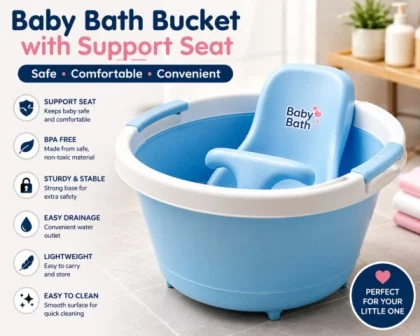
A baby bath bucket is a deep, cylindrical, or ergonomically contoured tub designed specifically for infants and toddlers. When paired with an integrated or removable support seat, it creates a secure cavity that allows babies to sit upright comfortably during bath time.
Key Structural Features
- Upright Design: Unlike flat, reclined tubs, buckets encourage an upright seating posture once the baby has sufficient head and neck control, or they provide cradled support for younger newborns.
- Non-Slip Base: Equipped with rubberized or suction-cupped feet to prevent sliding on bathroom tiles or inside standard tubs.
- Ergonomic Contours: Molded backrests and built-in crotch posts prevent the baby from slouching forward or sliding under the water.
- Water Economy: Because of their compact, deep footprint, these buckets require significantly less water to submerge the baby up to shoulder height, keeping the water warmer for longer periods.
Top Benefits of Using a Bath Bucket with Support Seat
Investing in a specialized bath bucket yields numerous tangible benefits for both baby and caregiver.
1. Replicates the Womb Environment for Calming Baths
Babies spend nine months in a warm, enclosed, fetal position. The wide-open space of a standard adult bathtub can feel overwhelming and frightening to a newborn. A bucket’s snug, deep walls make babies feel secure and contained, significantly reducing crying and fussiness during bath time.
2. Ergonomic Relief for Parents
Back pain is practically a universal rite of passage for new parents. Bath buckets can often be placed securely on a sturdy countertop, a specialized elevated stand, or at a comfortable height in a walk-in shower, eliminating the need to kneel on hard bathroom floors.
3. Water Conservation and Temperature Retention
Traditional baby tubs require gallons of water to fill adequately. Bath buckets use a fraction of that volume while still submerging the baby comfortably up to the chest and shoulders. Less water volume also means the bathwater retains its comfortable warmth much longer.
4. Promotes Core Strength and Posture
With the help of a secure support seat, babies practice sitting upright independently. This gentle engagement helps strengthen core muscles, laying a strong physical foundation for sitting up unassisted, crawling, and walking.
5. Portability and Compact Storage
Modern bathrooms and apartments often lack spacious storage. Bath buckets have a small footprint, making them easy to tuck away in a closet, slide behind a door, or pack into the trunk of a car for family road trips and vacations.
Putting Safety First: Crucial Rules for Using a Bath Bucket
While bath buckets and support seats offer exceptional security, water safety is paramount. No bath accessory can ever replace active, attentive parental supervision.
Crucial Safety Rule: Never leave an infant or toddler unattended in a bath bucket or support seat—not even for a second to answer the door or grab a towel. Drowning can occur silently in less than two inches of water within seconds.
Essential Safety Checklist
- Master Head Control Requirements: Ensure your baby meets the developmental milestone required for the specific seat. While some buckets accommodate newborns with reclined inserts, upright support seats generally require babies to have stable head and neck control (usually around 3 to 6 months of age).
- Check the Water Temperature: Always test the water with a reliable bath thermometer or your inner wrist. Ideal water temperature for a baby bath should hover around 37°C to 38°C (98.6°F to 100.4°F).
- Fill to the Safe Water Line: Most quality bath buckets feature an indicator line. Never overfill the bucket, as a high water level combined with a buoyant baby can compromise stability.
- Ensure a Non-Slip Setup: Place the bucket on a flat, stable, and completely non-slip surface. If placing it inside a larger bathtub, ensure the suction cups or rubber grips are firmly engaged.
- Keep Supplies Within Arm’s Reach: Gather your infant soap, washcloth, hooded towel, and fresh diaper before you fill the tub so you never have to reach away from your child.
How to Choose the Best Baby Bath Bucket with Support Seat
The baby gear market offers an array of options, making it easy to feel overwhelmed. Keep these core criteria in mind when evaluating products for your family:
Age and Weight Range Compatibility
Check the manufacturer’s guidelines carefully. Some buckets are designed strictly for newborns up to 6 months, while others feature modular, removable support seats that transition into toddler seats, accommodating children up to 12 or 24 months.
Material and Toxicity Standards
Ensure the tub is manufactured from high-grade, durable plastic that is BPA-free, PVC-free, and phthalate-free. Because babies have sensitive skin and a tendency to mouth objects, non-toxic materials are non-negotiable.
Comfort and Padding
Look for support seats that feature soft, tactile, warm-to-the-touch padding or silicone inserts. Hard plastic can become uncomfortable during longer bathing and play sessions.
Ease of Cleaning and Drainage
A good bath bucket should feature a reliable, leak-proof plug at the base for effortless draining. Smooth interior surfaces without hard-to-reach crevices prevent mold, mildew, and soap scum buildup.
Step-by-Step Guide: How to Give Your Baby a Stress-Free Bath Using a Bucket
Mastering the routine transforms bath time from a chore into a cherished ritual. Follow this step-by-step workflow:
- Prepare the Environment: Warm the bathroom to a comfortable ambient temperature (around 22°C to 24°C / 72°F to 75°F) so your baby doesn’t get chilled during undressing.
- Gather All Supplies: Lay out a clean diaper, fresh clothes, a washcloth, baby-safe cleanser, and a warm hooded towel within arm’s reach.
- Fill the Tub Safely: Fill the bucket to the designated water line using mixed warm water. Stir the water thoroughly with your hand to eliminate any hot spots. Verify the temperature with a thermometer.
- Undress and Secure the Baby: Gently undress your baby, talk to them soothingly, and lower them slowly into the support seat, supporting their head and back until they are settled securely.
- Wash from Top to Bottom: Begin by gently washing their face with a damp, soap-free cloth. Move down to their body, cleaning skin folds (neck, armpits, thighs), and wash their hair last so they don’t sit in soapy water while getting chilled.
- Rinse and Wrap: Gently lift your baby out of the support seat, immediately wrap them snugly in the hooded towel, and pat them dry carefully, paying close attention to skin creases.
Frequently Asked Questions (FAQs)
At What Age Is It Safe for a Baby to Use a Bath Bucket?
Many ergonomic bath buckets can be used from birth if they include a newborn sling or reclined insert. However, upright support seats are best utilized once your baby has gained steady head and neck control, typically around 3 to 4 months of age.
Can bath buckets prevent drowning?
No bath aid—including support seats, rings, or buckets—is a safety device against drowning. They are designed for comfort, posture, and support, but they do not eliminate the risk of a baby slipping under the water. Constant, uninterrupted adult supervision is mandatory at all times.
Are baby bath buckets easy to clean?
Yes. Because of their smooth, compact interiors, they are generally much easier to rinse, wipe down, and dry than large, awkward traditional baby tubs. Rinsing them out with clean water and letting them air dry upside down after each use prevents mold and soap scum.
How do I store a bath bucket when not in use?
Most bath buckets have a lightweight, compact build. They can be stored easily in a shower stall, hung by a sturdy handle if equipped, or stored on a closet shelf until the next bath time.
Final Thoughts
Choosing the right bath equipment can completely transform your daily routine, turning a stressful, slippery chore into a calm, joyful bonding ritual. A baby bath bucket with a support seat offers the ideal blend of ergonomic comfort for parents, water conservation, and a cozy, womb-like sense of security for growing infants.